HHS plans to invest $100M to support addiction recovery
The Department of Health and Human Services (HHS) will invest $100 million to improve homelessness, opioid addiction and public safety, it announced Monday.
The department’s initiative is dubbed STREETS, or Safety Through Recovery, Engagement and Evidence-based Treatment and Supports. STREETS will fund targeted outreach, psychiatric care, medical stabilization and crisis intervention for individuals experiencing homelessness and substance use disorder (SUD).
The program is part of President Donald Trump’s new Great American Recovery Initiative, which aims to drive stronger coordination across government, the healthcare sector, faith communities and the private sector to address the crisis.
The latest HHS announcement critiqued the Biden administration for “misguided” policies that it claims failed to address death, addiction, homelessness and crime across the U.S. The department, in its release, said Biden-era policies around harm reduction and housing first were ineffective, enabled future drug use and “were never intended to support people in their recovery to lead productive lives in their communities.”
Harm reduction approaches to SUD have been shown across multiple studies to protect drug users from infections and overdoses and increase access to treatment. Violent crime was also at a 50-year low when President Joe Biden ended his term, the White House Domestic Policy Council said at the time.
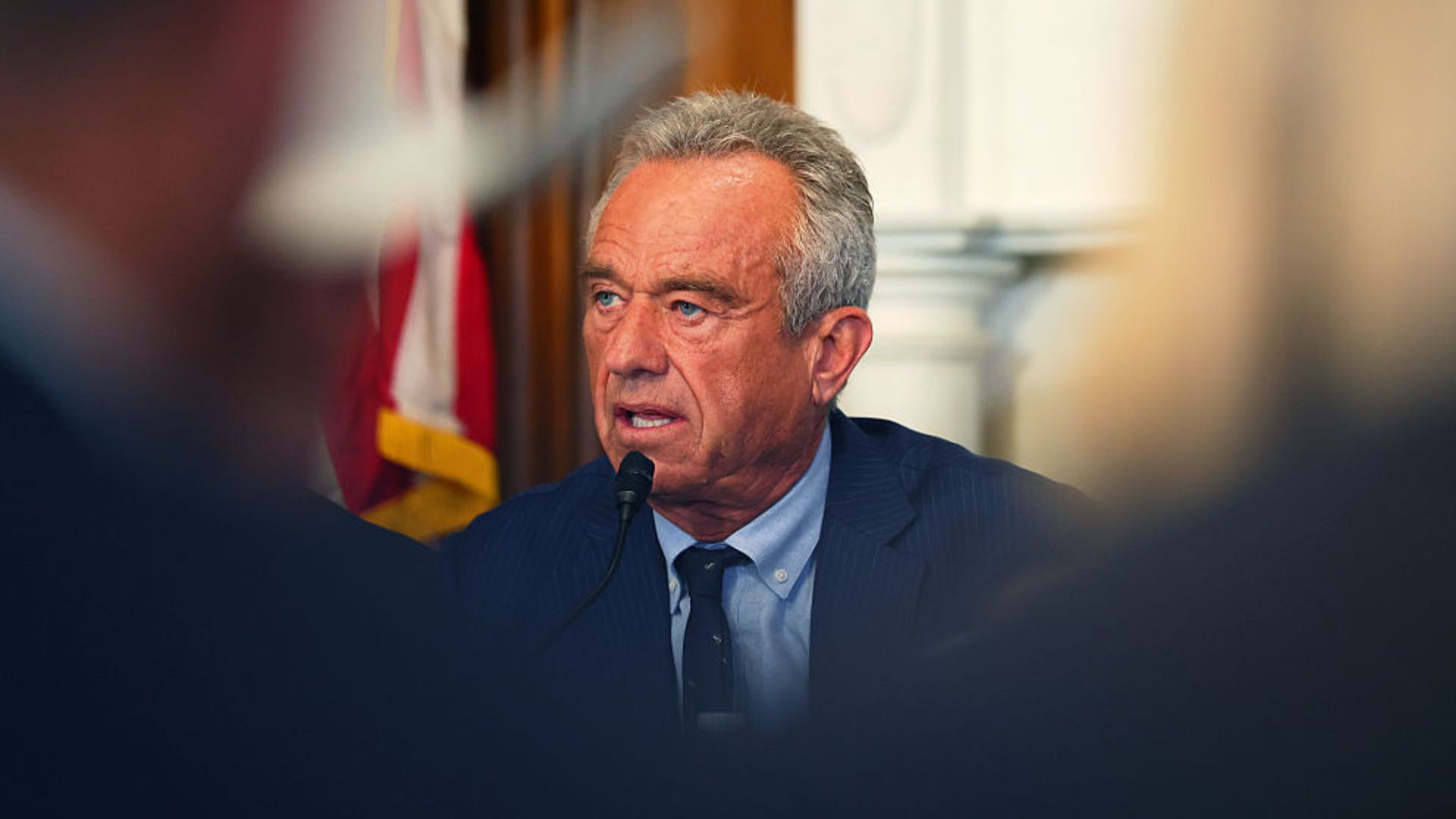
“Addiction begins in isolation and ends in reconnection,” HHS Secretary Robert F. Kennedy Jr. said in Monday’s announcement. He is co-chair of the Great American Recovery Initiative. “Thanks to the leadership of President Trump, we are bringing Americans suffering from addiction out of the shadows and back into community.”
Speaking at an event announcing the funding, RFK Jr. spoke about being in recovery for more than four decades and the importance of being of service to others to recovery. He said the HHS is focused on prevention to address the crisis, because “stopping addiction before it starts is the most effective intervention,” he said. Communities and pilot programs receiving the funding will build integrated care systems that will move people seamlessly between crisis, treatment and social supports, RFK Jr. said. He noted that faith-based organizations will play a crucial role in the efforts. “This is a chronic disease,” RFK Jr. said, “but above all it’s a spiritual disease.”
Additionally, RFK Jr. announced a $10 million Assisted Outpatient Treatment (AOT) program to support adults with serious mental illness. AOT is a civil court-ordered, community-based outpatient mental health treatment program. This type of treatment reduces hospitalizations and lowers incarceration and homelessness, RFK Jr. said at the event. No other details about how the program would work or to whom the funds would go were provided in the announcement.
The HHS’ Administration for Children and Families has also added three medications for opioid use disorder (MOUD) as eligible for federal funding. States and tribes can now get a 50% federal match to provide buprenorphine, methadone and naltrexone to parents when kids are at imminent risk of entering foster care.
In a statement to Fierce Healthcare, the American Society of Addiction Medicine (ASAM) President Stephen Taylor, M.D., M.P.H., praised the MOUD part of the announcement, calling it a “thoughtful” policy that can stabilize families.
“But what’s missing from this announcement is the critical role of medically or clinically managed residential addiction treatment, which is distinct from recovery housing,” Taylor said. Medicare doesn’t cover this service, he noted. “Congress should close this dangerous coverage gap by passing the Residential Recovery for Seniors Act.”
More than 48 million Americans suffer from SUD, according to 2023 data. Black and Native Americans are disproportionately impacted by overdose deaths, reaching 1.4 times and 1.8 times the rate of white Americans, respectively. The vast majority of people do not receive treatment, largely due to many programs requiring abstinence.
Universal abstinence goals are at odds with the personal goals of many individuals with SUD. Researchers have said abstinence-only approaches, which have historically been prevalent in U.S. public policy, are informed by an underlying belief that drug use is morally wrong and punish substance use. By contrast, harm reduction strategies acknowledge that people may not desire total abstinence and focuses on minimizing negative consequences of SUD, like overdose, infections and interpersonal conflict. Federal and state public policies have shifted over time toward harm reduction interventions, but remain greatly variable by state.
While the administration has rejected the term harm reduction, Taylor of ASAM said, it has embraced harm reduction approaches like naloxone and substance test kits. “Once viewed as enabling drug use, these tools are now widely accepted. Less mainstream approaches may similarly gain wider acceptance as they become more integrated with clinical care,” Taylor said.
The administration has already put substantial funding toward its realignment on drug use and homelessness.
Last fall, the Substance Abuse and Mental Health Services Administration (SAMHSA) awarded more than $45 million in new supplemental funding to State Opioid Response program recipients to focus on sober or recovery housing among young adults. This was directed by a separate Trump executive order that claimed shifting homeless individuals into long-term institutional care through civil commitment would “restore public order.” The executive order stated that SAMHSA grants should go toward evidence-based programs, without specifying what those are, while critiquing harm reduction programs “that only facilitate illegal drug use and its attendant harm.”
The SAMHSA has allocated $794 million in block grant awards so far this year, with nearly half going toward community mental health services for adults with serious mental illness and children with serious emotional disturbance. The remainder is going to the agency’s Substance Use Prevention, Treatment, and Recovery Services Block Grant program.
Addressing illicit fentanyl has been a linchpin of Trump’s second term, extending to policy and rhetoric well beyond the arena of public health. The president has used the issue to spread misinformation about cartels, justify tariffs and order unauthorized military attacks on boats from South America he claims are smuggling drugs. The lethal strikes, the death toll from which is now at 126 people, have been criticized by international advocacy groups and academics as illegal and not based on sound intelligence.
Editor’s Note: This story was updated on Tuesday, Feb. 3, with comments from the American Society of Addiction Medicine.
link