Ohio leading nation in La Crosse virus cases spread by mosquitoes


Top headlines of the week, Aug. 29 2025
Here are some stories you may have missed this week in central Ohio.
- Ohio leads the nation in La Crosse virus cases this year, with 13 reported so far.
- Franklin County is spraying for mosquitoes after detecting West Nile virus, a different mosquito-borne illness.
- Most people infected with La Crosse virus show no symptoms, but it can cause severe illness in children.
Ohio leads the nation this year in cases of one mosquito-borne virus while Franklin County will be conducting spraying because of another such skeeter-spread virus.
There are currently 13 cases in Ohio of La Crosse virus, a virus spread through the bite of infected mosquitoes, according to the Ohio Department of Health.
Franklin County has had no cases, but two other central Ohio counties — Delaware and Fairfield — have reported at least one case each of LaCrosse virus this year, according to the CDC. Holmes County has had three cases and Richland County has had two. The remaining Ohio counties, each with one case each, are: Athens, Carroll, Coshocton, Marion, Monroe, Stark, Summit, and Tuscarawas counties, the CDC reports.
Only a handful of other states have reported at least one case of the disease this year: Kentucky, Missouri North Carolina, South Carolina, and Tennessee, according to an interactive map from the Centers for Disease Control and Prevention.
What is La Crosse virus?
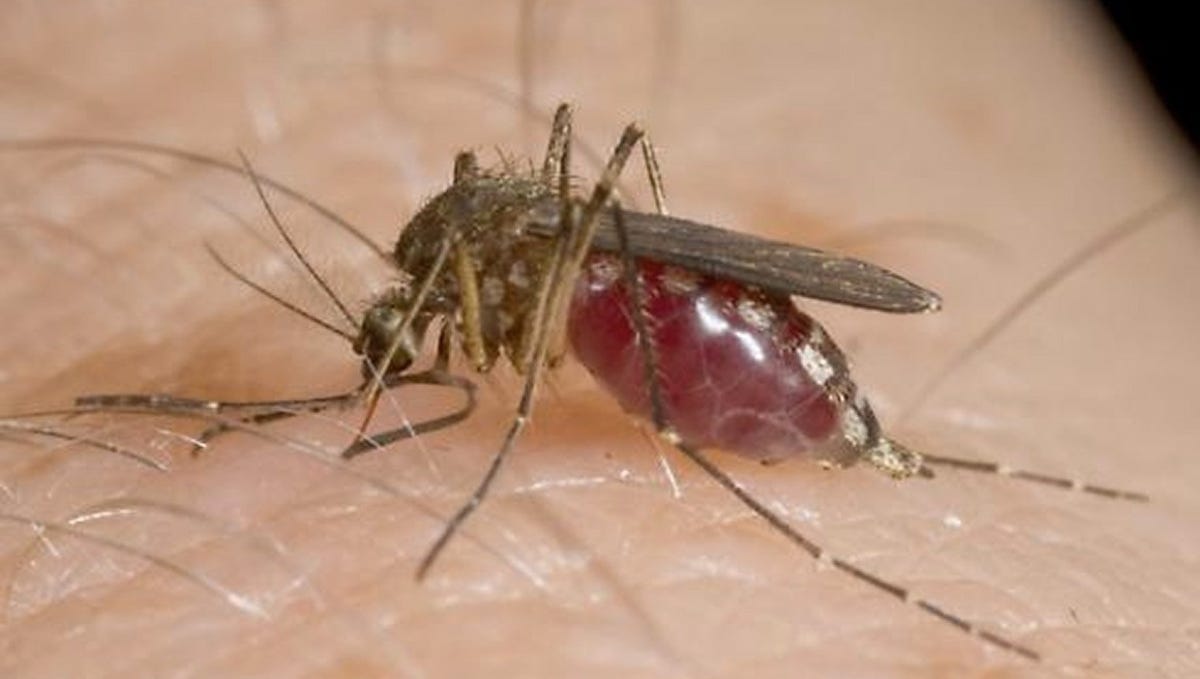
The La Crosse virus is an arthropod-borne virus spread by infected mosquitoes. In Ohio, most infected people are bitten by the eastern treehole mosquito, an “aggressive daytime biting mosquito commonly found in wooded areas,” according to the CDC. These mosquitoes are usually found in the eastern and southeastern areas of Ohio where silver maple, oak, and beech tree forest habitats are conducive for breeding.
The CDC says that La Crosse virus is endemic in Ohio, with around 20 cases reported per year. Ohio has reported more human cases than any other state in the country.
Generally, people who are infected with La Crosse virus have no visible symptoms. Those who do experience symptoms will begin feeling them between five and 15 days after a bite from an infected mosquito. Symptoms include fevers, headaches, nausea, vomiting, and lethargy, according to the Ohio Department of Health.
Children under 16 years old tend to experience more severe symptoms, such as seizures, comas, and paralysis. There can also be a range of neurological complications after recovery, according to the state health department.
Franklin County Public Health will be spraying where mosquitoes with West Nile virus found
Meanwhile, Franklin County Public Health will continue spraying areas where mosquitoes have tested positive for the West Nile virus — another disease spread by the bite of infected mosquitoes.
Tonight, Sept. 8, the public health agency will be spraying the northwestern portion of Hilliard, the northern and southern portions of Upper Arlington, the eastern portion of Dublin, and the southern portions of Sharon and Perry townships, according to an interactive map from the county health agency. Spraying for these areas will begin at 8:30 p.m.
On Sept. 9, Franklin County will be spraying the northern and southern portions of Grove City, Obetz, Canal Winchester, Madison and Hamilton townships, and the northern portion of Franklin Township. Spraying for these areas will begin at 8:30 p.m., weather permitting.
On Sept. 10, the county health agency will spray the southern portion of Bexley, the western and eastern portions of Whitehall, the northwestern, southwestern, and southeastern portions of Reynoldsburg, and the northern and southern portions of Pickerington. Spraying for these areas will also begin at 8:30 p.m., weather permitting.
FCHP’s map at the areas to be sprayed. You can use the plus or minus buttons on the map to zoom in or out on the spray zones for more information. The zone boundaries are generally defined by larger secondary roads.
What is West Nile virus?
West Nile virus is spread through mosquito bites. It’s one of the most common viruses transmitted by mosquitoes and can be found in North America, Europe, Africa, the Middle East, Australia, and Asia.
Most people exposed to the virus do not experience symptoms, but one in five people infected will experience fever, headache, body aches, and other flu-like symptoms, according to the Centers for Disease Control and Prevention. While most people recover completely after being infected, there are times when fatigue and weakness can last for weeks or months.
Serious symptoms can arise, but only in about one in 150 people, the CDC says. In these rare cases, infected people may develop a condition known as encephalitis, which is the inflammation of the brain, or meningitis, inflammation of the membranes surrounding the brain and spinal cord. People over 60 years of age are at greater risk for severe illness if infected, as well as people with certain medical conditions like cancer and diabetes.
What kind of spray will Franklin County Public Health use?
The FCHP will use an insecticide called Permanone 30-30, a low-odor spray that is used for adult mosquitoes, midges, and black flies, according to the county health agency.
Reporter Shahid Meighan can be reached at [email protected], atShahidMeighan on X, and at shahidthereporter.dispatch.com on Bluesky.
link