Physical and mental health concerns for children who don’t play outside
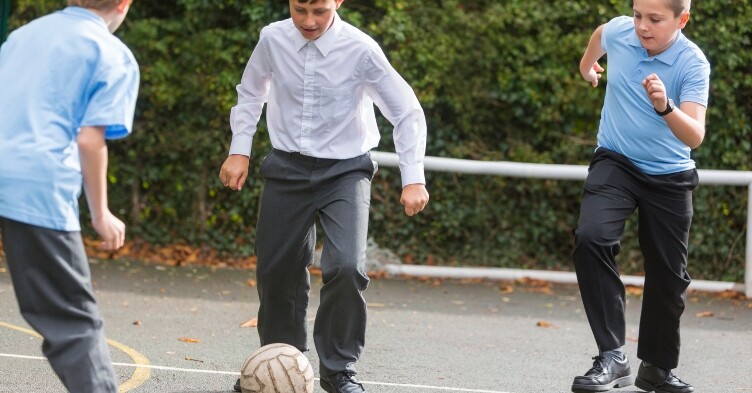
Over a third of children are not playing outdoors after school, a new study finds, raising concerns about the impact this is having on children’s mental and physical health.
Researchers at the University of Exeter found that 34 per cent of children typically remain indoors after school, and one in five do not play out at the weekends.
Children who spend more time outdoors develop stronger social and emotional skills. However, the new study shows that children from different ethnic and socioeconomic backgrounds develop distinct patterns of outdoor play and gain benefits from outdoor spaces at varying times of the week.
Children from more affluent areas were found to gain the most significant benefits from outdoor play, suggesting more could be done to meet the needs of children growing up in areas with greater deprivation.
Related Article: Government to ban high-caffeine energy drinks for under-16s
Outdoor play in urban community
The findings, published in Wellbeing, Space & Society, highlighted the need for safe, culturally sensitive outdoor spaces that benefit and improve the health of children from a mix of ethnic backgrounds.
The researchers analysed data from 2,568 children aged seven to 12 from a multi-ethnic, economically deprived urban area in England to see whether the benefits of outdoor play differ by ethnicity or deprivation.
The children were part of the long-running Born in Bradford study, which has been tracking the health and wellbeing of mothers and children from pregnancy for almost two decades.
We need to take proactive steps to encourage outdoor activities and ensure children lead healthy and active lives
Researchers examined the frequency and timing of children’s outdoor play, correlating it with their scores for social-emotional competency (SEC). Parents completed the Strengths and Difficulties Questionnaire (SDQ), which assesses both behavioural and emotional challenges, including attention, conduct, and peer relationships, as well as positive behaviours such as kindness and cooperation.
Overall, the findings show that outdoor play was associated with improved child social-emotional competency. However, the link between outdoor play and children’s social-emotional skills varied depending on the child’s ethnic background.
Different ethnic groups gained benefits from outdoor play at different times of the week, with White British children playing outside more on weekdays and South Asian children playing outside more at the weekends.
Related Article: Vaping age verification too easy to bypass, survey suggests
Need to promote active lives
Lead researcher Dr Mark Ferguson from the University of Exeter said: ‘Our finding that many children do not regularly engage in outdoor play is worrying because it is linked to various health issues, including obesity, anxiety and depression.’
He added: ‘We need to take proactive steps to encourage outdoor activities and ensure children lead healthy and active lives.
‘Simple measures such as creating play-friendly residential areas and safer urban environments where families can relax, exercise, socialise, and play can make a big difference. But it’s important to remember cultural differences and engage with communities to make these initiatives successful.’
The researchers suggest that the benefits of outdoor play stem from the physical activity involved, the social aspect of playing outside, and the fact that outdoor play is often more adventurous than indoor play, all of which allow children to develop their social-emotional skills.
The findings highlight the role that healthcare workers can play in reinforcing messages about the value of outdoor activity during routine health checks.
Related Article: Better sleep could help reduce risk of self-harm in teenagers
Professor Rosie McEachan, director of the Born in Bradford programme, added: ‘This study shows how important it is for children’s mental health to get off their screens and play outdoors after school and at weekends. We are lucky in Bradford to have many beautiful parks and green spaces, but these findings show that the local streets in which we live are just as important a space for children, and we need to make sure they are safe and welcoming spaces, free from traffic and pollution.’
link