Selma Blair Gives Updates on Living With MS in Remission
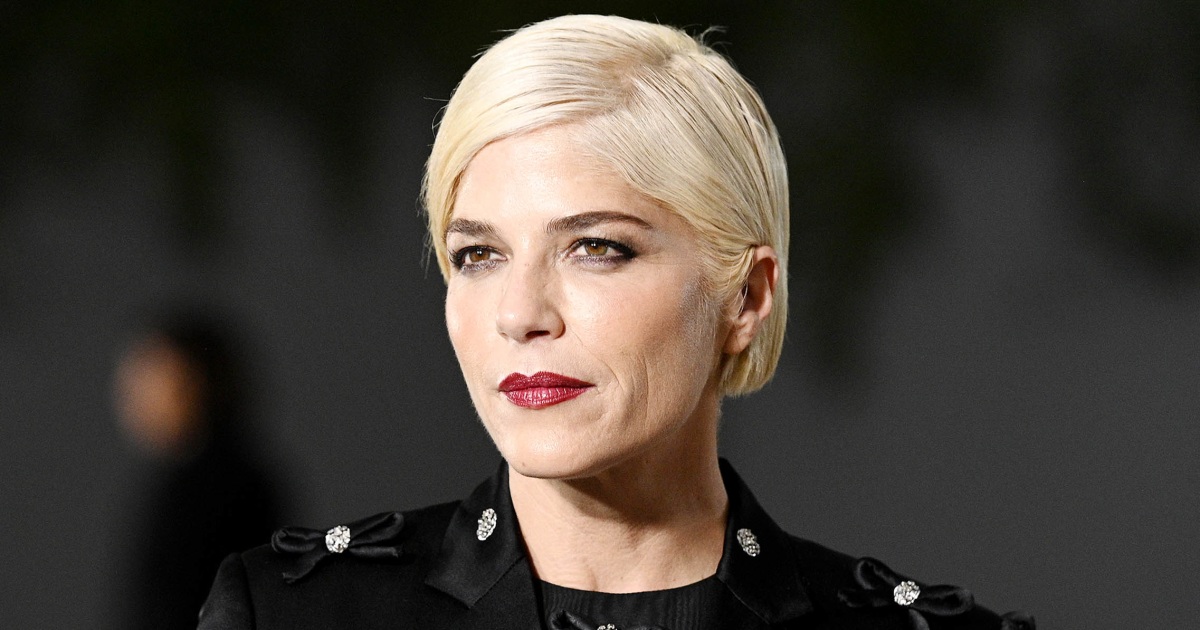
Selma Blair has been in remission for MS since 2021, but she still has to be proactive about her health.
“A few years ago, I didn’t think I’d be here…” Blair said during a Feb. 6, 2025, appearance on TODAY. Since revealing her diagnosis, Blair has been on a mission to adapt to life with MS. “It’s been a long time of learning a new normal,” she said, but now, she’s feeling good. “I’m doing great,” she said.
In 2018, the 52-year-old announced that she’d been diagnosed with Multiple Sclerosis, a central nervous system condition that damages nerves, affecting the electrical signals in the brain. MS can cause muscle weakness, vision changes, numbness and memory loss. And though Blair had been experiencing symptoms for some time, it would be years before she’d finally receive a diagnosis. She longed for answers about the changes in her body, admitting to TODAY she felt “broken inside” and worried she was “making it up” before doctors confirmed she was ill.
In 2021, she entered remission and said no new lesions were forming.
Blair’s day to day wasn’t always this bright, though, not even when she first entered remission. But, she says, she’s making significant progress. “I did not (account) for how long recovery really took,” Blair admitted. The disease, she said, aged her. “I’ve had to fake it till I make it… But I’m getting back on track.”
“I’m still here,” she said.
Below, take a look back at Blair’s road to remission.
How Was Selma Blair Diagnosed With MS?
Blair revealed in October 2018 that she had been diagnosed with MS in August of that year but said that she had likely been living with the disease for at least 15 years.
“I am a forthcoming person and I want my life to be full somehow. I want to play with my son again. I want to walk down the street and ride my horse. I have MS and I am ok,” she wrote in an Instagram post at the time.
Since then, she’s been open with her fans about life with MS, participating in a documentary about her life and diagnosis, and sharing many updates on social media and in interviews detailing what it’s like to parent with MS.
“Since I had (my son, Arthur,), I’d been afflicted with MS and I didn’t know,” Blair said on TODAY on Feb. 6, 2025. “I was diagnosed later. So, my fatigue was always the main issue.” Blair recalled calling on other parents to ask them about how they were dealing with the constant fatigue.
When the spasms, a common symptom of MS, started, Blair admitted to US Weekly that she turned to alcohol to cope. She became sober in 2016, and two years later she finally received her diagnosis. “Once I knew I had MS — which I’d had for a while — [things] made so much more sense,” Blair told the magazine.
Now, Blair says, “I’m so much happier. Yes. There are setbacks and my heart breaks when life goes off the rails. I was a sad person. I wanted joy and good things but I was living a lie because I didn’t know I was sick.”
Since being diagnosed, as part of her advocacy work, Blair launched an adaptive clothing line with long-time friend and designer Isaac Mizrahi.
“We’re taught you don’t look capable if you’re carrying around a chronic disease,” Blair told TODAY in 2023. But when a stylist she previously worked with “didn’t make it a big deal” that she was living with a chronic illness, she shared the story online, which gained traction and led to her connecting with Mizrahi for the line.
By talking openly about her own MS, Blair hopes to help other people who are dealing with the condition feel seen.

What Has Blair Said About Remission?
In November 2023, Blair opened up to “Meet the Press” host Kristen Welker about how she was “doing better every day” but still experiences “pain every day.”
“I have dystonia, also, that really doesn’t always flare up for entire conversations, but it’s almost like someone with a stutter maybe, or a type of Tourette’s,” Blair said in the interview.
Dystonia is defined by the Mayo Clinic as a movement disorder that causes muscles to involuntarily contract, leading to repetitive or twisting movements.
“So there can be a lot of discrimination and confusion I think with people thinking I’m putting something on,” she continued. “But the real fact is I really am in pain all the time.”
Being open, she said on TODAY, is her way of helping others with MS. “I found that people really were so grateful and there really was a need for people to be able to get more information without stigma,” she said.
That means being open about her ups and downs.
Blair said there’s a stiffness in her that never subsides, adding that there’s “no amount of Botox I could get in my back and muscles or massage or anything that’ll reach it.”
She explained that though she feels pain inside her body, she can’t physically feel anything on her skin. “I don’t feel it when someone touches me,” she said.
She also shared in an Instagram video that she’s living with another diagnosis — Ehlers-Danlos syndrome, a connective tissue disorder linked to MS.
“Ehlers Danlos will make you really stiff because I’ll pull my muscles too easily … so I get some injuries,” Blair said.
In Sept. 2025, Blair told TODAY.com that she was under the impression that her remission had been relapse-free, but it “turned out I did have another relapse,” she revealed.
Blair recalls not feeling well some time ago. She went to a new doctor who determined she’d relapsed and offered her a new drug which had recently become available and improved her symptoms.
Now, she’s taking advantage of her good health. “I really wanted to do as much as I can in my life while I have this great time being relapse-free,” Blair says. These days, she’s able to ride her horse, and she’s noticing improvements as she walks through narrow spaces, such as hallways, which would typically trigger movement and speech changes. “I have a lot of gains. You know, I really do,” she added.
Blair also says she’ll continue being as open as she can about her experiences to inspire people to continue embracing life, even while ill. “I want to try as much as I can, and I want to show people too, that just because you get a hard diagnosis, it doesn’t always… mean a death sentence, that there are ways to lighten the load,” she says. “And if I can help lighten the load for other people or for their parents or anyone, then I’m so happy to be able to do that in any way.”
What Treatments Has Selma Blair Received for Her MS?
Blair has had chemotherapy, stem-cell treatments, intravenous therapies and Botox injections to treatment her MS.
She said that she’s undergone a hematopoietic stem-cell transplantation (HSCT). This was possible, she said, because doctors harvested the cells from her bone marrow before she was exposed to chemotherapy in an effort to reset her immune system.
As for the chemo, she was opposed to it at first but followed her doctor’s advice.
“And we did it, and I immediately felt better. I never felt better than when I was on chemo,” she told Welker in 2023.
Since these treatments, Blair said at the time that her current pain level is “almost just as high, except for I don’t have this horrible trigeminal neuralgia I always had before the HSCT,” referring to severe facial pain.
Blair said she continues to do intravenous immunoglobulin (IVIG) therapy, which she described as a four-hour blood transfusion, every two weeks. The therapy “keeps me from getting sick,” Blair told US Weekly. She also has a home nurse and a service dog “for things people don’t see.”
She’ll also get MRIs throughout the year to accompany her treatments. “I know a lot of people can’t afford it, but for me, [it] really alleviated the MS progression incredibly. It saved my life,” US Weekly reports.
She’s also gotten Botox injections — just not in her face. “I’ve had 100 Botox injections in my back to strengthen muscles, and that’s made me not bother with getting Botox in my face. When you have to deal with so much for your health you forget about what you look like,” Blair added.
What Are Selma Blair’s MS Symptoms?
“I don’t live in fear of this condition at all,” Blair told TODAY.com in 2023, adding that she’s learned to live with a variety of lingering MS symptoms, including fatigue, speech glitches, and movement and balance challenges.
“I still have symptoms, (but) I do not have the absolute weakness that I had for a long time, and if I focus on something really truly and I’m awake, I can correct it. But often, it just takes a lot of energy,” she said.
For instance, Blair regularly has to normalize her gait while moving.
“Getting up, you would think I have a very difficult time walking the first few steps, but then I start to get in the rhythm and then if I’m uninterrupted for a while, I can absolutely walk smoothly. And then as soon as I sit down again, it starts all over when I start moving again. So that is pretty standard all the time,” she explained.
“I don’t know where my body always is in space when I’m tired. When I’m tired, I become very spastic, and my speech is dystonic,” she said, which occurs when muscles contract involuntarily.
The star said she doesn’t have a long-term prognosis for how long her remission will last. But she has found ways to manage symptoms when they do arise.
“I can sit on the ground in a squat position and a lot can be relieved. That is also another reason why I personally enjoy my service dog. It makes me look like I’m not a middle-aged woman having a breakdown in the street squatting as passersby are there, and I’m crying,” she said, adding that she has a condition that makes her prone to involuntary crying, which she takes medicine for.
The sun is also “kryptonite” for Blair, who said her speech becomes very dystonic when she’s in the sun, even for a few minutes.
“It’s like hiccups. I become very weak in the sun. That is something (that happens) whether I’m in a flare or not. That is an autoimmune issue. The sun causes inflammation and, (for) a lot of people, that’s normal. It triggers autoimmune (issues),” she said. “Even though I’m not in an active flare and maybe won’t be for a long time, I do feel it, and they’re called pseudo flares. And that seems to never leave me.”
Blair also regularly deals with a lack of appetite.
“I only can digest food once I’m relaxed or else I’m kind of dry heaving,” she said.
Blair is the first to admit that she was lucky to have the resources to afford and access top-tier medical care, and she hopes to make that more accessible for everyone with MS.
“A lot of people aren’t getting the help and attention that they could,” she said.
By talking openly about her own life with MS, Blair hopes to help other people who are dealing with the condition feel seen.
“When I’m talking about one of my issues that’s meant to cover a broader theme, not anyone else’s disability, but a broader theme of what it can do to feel supported in your community,” she said.
link