Expert warns parents about social media’s impact on youth mental health at Westerville school event
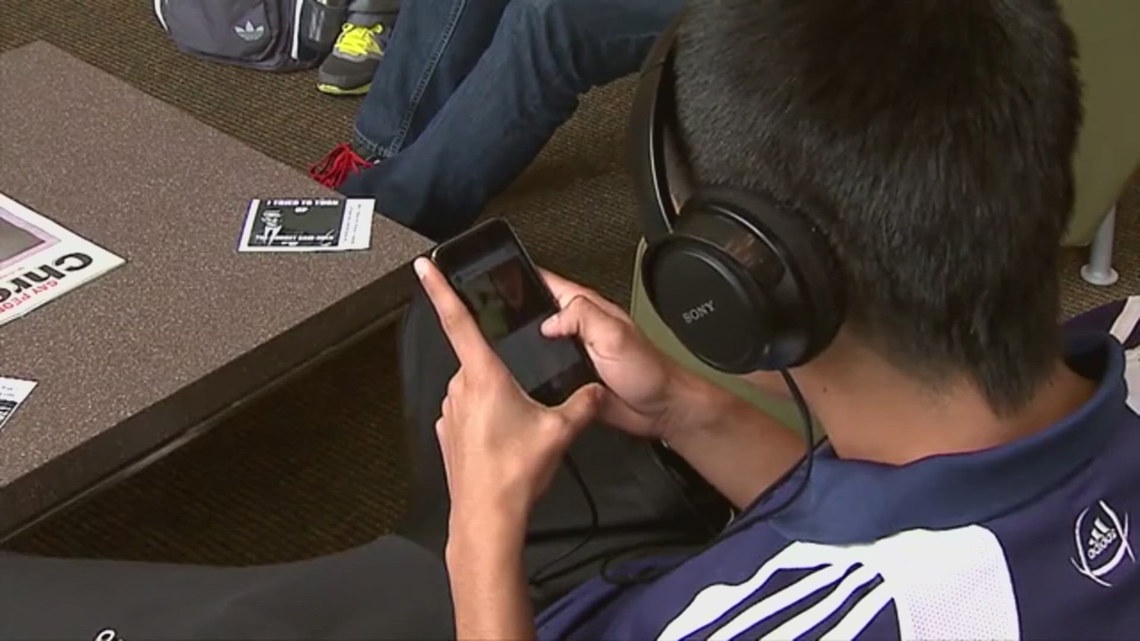
Dr. Michael Flores spoke to students and parents at Minerva Park Middle School about the daily impacts he observes social media having on young people.
WESTERVILLE, Ohio — The Westerville School District brought in a pediatric psychologist from Nationwide Children’s Hospital Tuesday night to educate families about the mental health risks associated with excessive internet and social media use among children.
Dr. Michael Flores, who works as a pediatric psychologist at Nationwide Children’s Hospital, spoke to students and parents at Minerva Park Middle School about the daily impacts he observes social media having on young people.
The presentation comes as recent statistics reveal widespread internet usage among adolescents. According to a 2024 Pew Research survey, 96% of kids ages 12-17 report daily internet use and 50% say they’re online “almost constantly.”
“The statistics are pretty shocking,” said Lindsey Nicholson, a parent in the school district who attended the event.
During his presentation, Dr. Flores highlighted several risks of social media exposure, including increased depression, anxiety, loneliness and poor body image from constant comparison to unrealistic or harmful content.
“The biggest one to me is the mental health aspect of it,” Nicholson said.
Dr. Flores emphasized that parents’ own habits play a crucial role in shaping their children’s relationship with technology.
“One of the best predictors of social media use and screen time use in kids is how much their parents are using it,” Flores said.
Beyond modeling limited screen time, Flores stressed the importance of parents monitoring which apps and games their children use and understanding the content they’re exposed to.
“I found even with my own kids that they can be on YouTube, and I walk away 10 minutes and they’re watching something completely different because it just plays the next thing, and the next thing is somewhat unpredictable,” Flores said.
He noted that controls exist to prevent videos from automatically playing. He also shared a warning about Roblox, a popular gaming platform.
“There’s a lot of messaging that can occur with that. And if parents don’t understand that these people from all over the world can be different ages, that’s something they really want to pay attention to in the privacy settings as well,” Flores said.
For many parents, managing their children’s digital lives presents unique challenges their own parents never faced.
“We didn’t have this when we were younger so, and I can’t go to my parents and say how did you handle this? Because they didn’t have to,” Nicholson said.
Nicholson, whose daughters are in fifth and seventh grade, acknowledged the learning process involved in navigating these issues.
“We’re not perfect at it by any means, but it’s definitely something that I feel like we’re on the right track,” Nicholson said.
Dr. Flores advised parents to create an environment where children feel comfortable discussing their online experiences without fear of harsh punishment.
“If they feel like they’re gonna get yelled at, get lectured, have the phone taken away for a month, then they’re less likely to come to you with some of those problems,” Flores said.
He also encouraged parents to be patient with themselves as they develop strategies that work for their families.
“They should give themselves a little bit of grace, this is really hard stuff to do,” Flores said.
Flores recommended that parents visit www.commonsensemedia.org, where they can research different social media apps, games and TV shows to learn more about them before allowing their children access.
link