Key support dries up for children traumatized by Central Texas floods
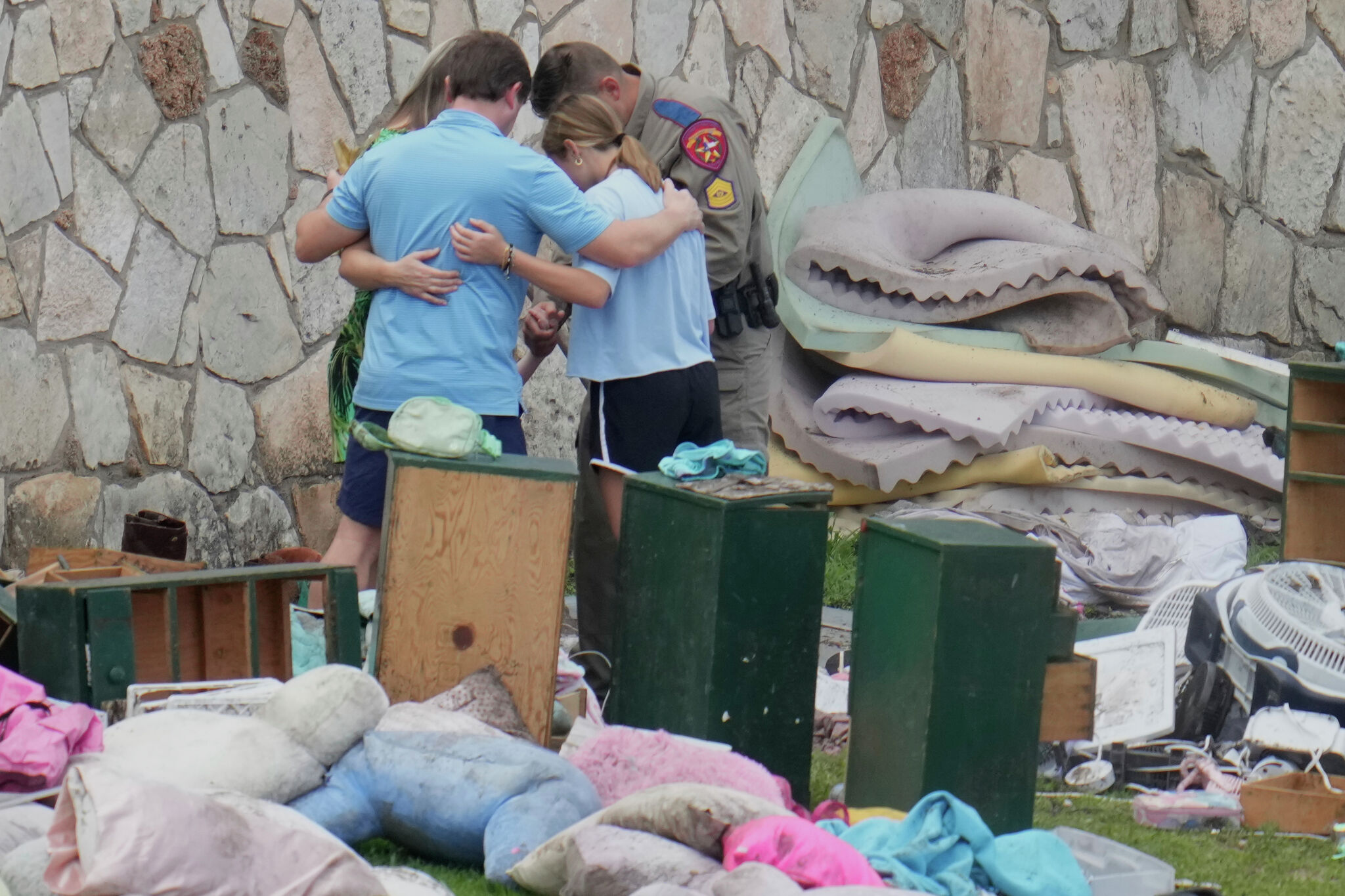
Last month, NPR aired a story about volunteers who spent hours looking for stuffed animals along the banks of the Guadalupe River, hoping to reunite them with children overwhelmed by the catastrophic Texas floods. I was driving through northwestern Vermont as I heard it, the day after several communities in our state experienced devastating flooding for the third year in a row. I wept in my car, picturing the bedraggled stuffed lamb my 9-year-old daughter had taken with her to camp the previous week.
I cannot fathom the extent of the grief and loss that Texas families are feeling, but I do know that the mental health effects of disasters like these bruise hearts and minds far beyond the reach of floodwaters.
In the wake of disasters — which are becoming more dangerous, intense and distressing because of climate change — children’s mental health deserves particular attention, given the profound impacts that traumatic childhood experiences can have on their development. I’m deeply worried that the Trump administration’s attacks on public health, education and climate action will make recovering from disasters even harder than it already is — especially for young people and their families.
According to the American Psychiatric Association, the number of people who experience mental health impacts after disasters often outnumbers those physically injured by an astonishing 40 to 1. Children are uniquely vulnerable to the mental health impacts of floods and other disasters, which can include trauma, anxiety and depression — and they are dependent on adult caregivers who are also experiencing intense stress.
Yet on the same day as the Texas flooding, President Donald Trump signed his “Big Beautiful Bill” into law, with more than $1 trillion in cuts to Medicaid and the Children’s Health Insurance Program. Medicaid is the country’s single largest payer of mental health services, and both Medicaid and CHIP play a crucial role in covering mental health services for kids and teens. Trump’s big, brutal funding cuts will only make it harder for disaster-stricken families to access the mental health care they need.
Additionally, the Trump administration recently announced that it would cut $1 billion in Department of Education funding for school mental health grants. In their new book “Students, Schools, and Our Climate Moment,” Laura Schifter and Jonathan Klein write that: “Schools can provide supportive mental health services for students before, during, and after extreme weather events… (they) are integral to a support system for young people.” Schools in rural communities where mental health services are stretched especially thin are worried about the impact of the Trump administration’s grant cuts.
Perhaps most disturbingly, the Trump administration’s assaults on disaster preparedness and climate action sabotage our ability to prevent life-threatening disasters in the first place, risking unnecessary future trauma for children and families. Canceling FEMA’s Building Resilient Infrastructure and Communities program, which helped communities try to reduce disaster risks, will make it harder to prevent loss of life and property when disasters inevitably happen. Cuts to the National Weather Service may jeopardize the quality of forecasts, leaving families in the dark when dangerous storms threaten children at summer camps.
“All across the country, Americans’ hearts are shattered,” Trump said in a visit to Kerrville in the wake of the floods, promising that his administration is doing “everything in its power” to help Texas communities recover.
My heart is breaking, too — not just for the campers who died, but for the survivors whose long road of healing ahead will now be all the harder.
Elizabeth Bechard is the public health manager for Moms Clean Air Force and author of “Parenting in a Changing Climate: Tools for Cultivating Resilience, Taking Action, and Practicing Hope in the Face of Climate Change.”
link